
Why Professional Hospital Security Services Are Crucial for Patient Safety
Home < Blog <Why Professional Hospital Security Services Are Crucial for Patient Safety
Federal Security and Management Services
Why Professional Hospital Security Services Are Crucial for Patient Safety
Hospitals are places where patients and families expect safety, care, and peace of mind. Along with medical treatment, maintaining a secure environment is essential for ensuring smooth hospital operations and protecting patients, staff, visitors, and valuable medical assets. This is why professional Hospital Security Services play a crucial role in modern healthcare facilities. As hospitals become larger and more complex, the demand for reliable security solutions continues to grow to ensure safety, discipline, and emergency preparedness.
From managing emergency situations to controlling unauthorized access, hospital security plays a major role in maintaining order and safety. Federal Security provides professional security solutions designed to support hospitals and healthcare facilities with reliable protection and efficient monitoring systems.
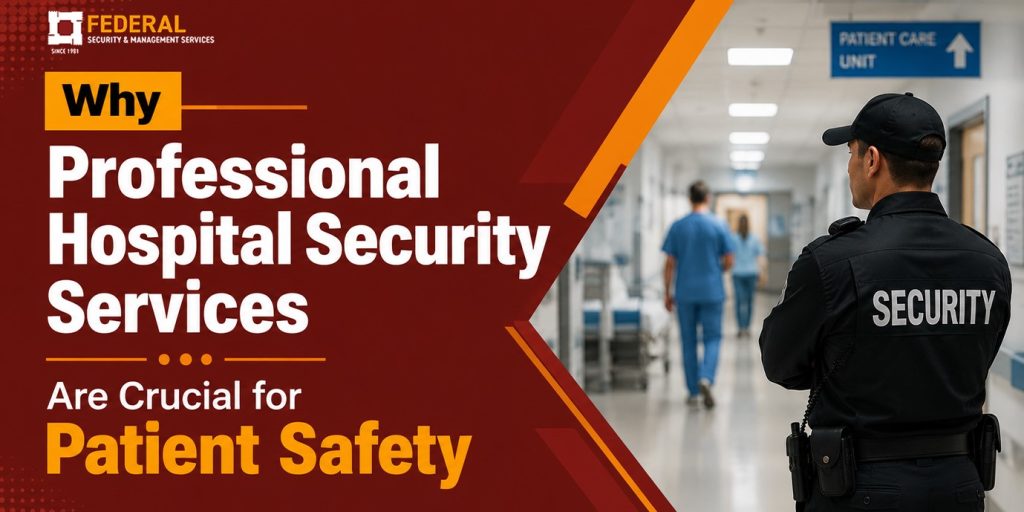
Importance of Security in Hospitals
Hospitals operate 24/7 and receive a constant flow of patients, visitors, vendors, and medical staff. This makes healthcare facilities vulnerable to multiple security challenges.Common Security Challenges in Hospitals
- Unauthorized entry
- Theft of medical equipment
- Patient disturbances
- Violence or aggressive behavior
- Emergency management issues
- Crowd control during critical situations
Why Patient Safety Depends on Hospital Security
Patient safety is not limited to medical treatment alone. A secure hospital environment also contributes to patient well-being and operational efficiency.1. Protection from Unauthorized Access
Hospitals contain sensitive areas such as operation theaters, ICUs, pharmacies, and patient wards. How Security Helps- Restricts access to authorized individuals
- Prevents trespassing
- Protects confidential patient areas
2. Emergency Response Support
Hospitals often face emergency situations requiring immediate action. Security Teams Assist With- Crowd management
- Emergency evacuation
- Fire safety coordination
- Handling panic situations
3. Prevention of Theft and Loss
Medical equipment and medicines are valuable assets that require protection. Security Measures Include- CCTV monitoring
- Entry and exit checks
- Patrol services
- Asset protection systems
4. Managing Visitor Movement
Hospitals receive large numbers of visitors daily. Why Visitor Control Matters- Prevents overcrowding
- Reduces disturbance in patient areas
- Improves hospital discipline
5. Handling Aggressive Situations
Stressful medical situations can sometimes lead to conflicts or aggressive behavior. Security Personnel Help By- De-escalating conflicts
- Protecting hospital staff
- Maintaining calm environments
Role of Professional Security Guards in Hospitals
Security personnel perform multiple responsibilities beyond guarding entrances.- Access Control Management They monitor and manage entry points throughout the hospital.
- Surveillance Monitoring Security teams supervise CCTV systems to detect suspicious activity.
- Patient and Staff Assistance Guards often assist patients and visitors with directions and emergency support.
- Incident Reporting Professional documentation helps hospitals maintain proper records of incidents and security events.
- Nighttime Security Patrols Regular patrols help ensure safety during late hours.
Importance of Trained Hospital Security Personnel
Hospital environments require specialized security training. Why Specialized Training Matters- Understanding healthcare protocols
- Handling sensitive patient situations
- Managing medical emergencies
- Coordinating with hospital staff
Benefits of Professional Hospital Security Services
Healthcare facilities benefit greatly from professional security management.- Improved Patient Confidence Patients feel safer in secure hospital environments.
- Better Staff Protection Doctors, nurses, and hospital workers can focus on patient care without security concerns.
- Reduced Risk of Incidents Proper monitoring helps prevent disturbances and criminal activities.
- Enhanced Emergency Preparedness Security teams support organized responses during emergencies.
- Better Operational Efficiency Controlled environments improve overall hospital management.
Technology Used in Modern Hospital Security
Modern security systems combine manpower with advanced technology. Common Security Technologies- CCTV surveillance systems
- Biometric access control
- Visitor management systems
- Alarm systems
- Emergency communication systems
Areas That Require Strong Hospital Security
Certain areas in hospitals require additional monitoring and protection.Critical Areas Include
- Intensive Care Units (ICUs)
- Emergency departments
- Pharmacies
- Laboratories
- Operation theaters
- Parking areas
Why Hospitals Need 24/7 Security Services
Hospitals operate continuously without closing.Importance of Round-the-Clock Security
- Immediate response availability
- Continuous monitoring
- Safer nighttime operations
- Better emergency preparedness
Why Choose Federal Security
Federal Security provides professional and dependable security services tailored to the needs of healthcare facilities. Key Advantages- Trained security personnel
- 24/7 monitoring support
- Customized hospital security solutions
- Emergency response preparedness
- Professional crowd and access management
Emerging Trends
- AI-Based Surveillance Smart monitoring systems improve threat detection.
- Contactless Access Systems Biometric and digital access control improve security and hygiene.
- Integrated Emergency Systems Advanced coordination improves emergency response efficiency.
- Data Security Awareness Hospitals are increasing focus on digital and physical security integration.
Tips for Improving Hospital Security
- Conduct Regular Security Audits Routine inspections help identify potential risks.
- Train Hospital Staff Awareness training improves emergency preparedness.
- Install Modern Surveillance Systems Advanced monitoring improves overall security control.
- Maintain Visitor Policies Proper visitor management reduces unnecessary risks.
- Work with Professional Security Providers Experienced agencies offer specialized hospital security expertise.
Conclusion
Patient safety depends not only on quality healthcare but also on a secure and well-managed hospital environment. Professional hospital security services help prevent unauthorized access, manage emergencies, protect valuable assets, and maintain peace within healthcare facilities. By partnering with experienced providers like Federal Security, hospitals can ensure reliable protection for patients, staff, and visitors. Investing in professional security services is essential for maintaining trust, safety, and smooth healthcare operations.Frequently Asked Questions (FAQs)
Hospital security protects patients, staff, visitors, and medical assets from potential risks.
They manage access control, monitor surveillance, handle emergencies, and maintain safety.
It helps prevent unauthorized access, violence, theft, and disturbances.
Hospitals operate continuously and require constant monitoring and emergency support.
Yes, trained security personnel assist during emergencies and coordinate safety procedures.